- Home
- About Us
- Products
- Aluminum Ceramic Cookware
- Aluminum Ceramic Cookware Set
- Aluminum Ceramic Kitchenware Set
- Aluminum Ceramic Fry Pan
- Aluminum Ceramic Deep Fry Pan
- Aluminum Ceramic Sauce Pan
- Aluminum Ceramic Casserole
- Aluminum Ceramic Grill Pan
- Aluminum Ceramic Pizza Pan
- Aluminum Ceramic Wok Pan
- Aluminum Ceramic Dutch Oven
- Aluminum Ceramic Saute Pan
- Aluminum Non-Stick Cookware
- Aluminum Non-Stick Cookware Set
- Aluminum Non-Stick Kitchenware Set
- Aluminum Non-Stick Fry Pan
- Aluminum Non-Stick Deep Fry Pan
- Aluminum Non-Stick Sauce Pan
- Aluminum Non-Stick Casserole
- Aluminum Non-Stick Grill Pan
- Aluminum Non-Stick Pizza Pan
- Aluminum Non-Stick Wok Pan
- Aluminum Non-Stick Dutch Oven
- Aluminum Non-Stick Saute Pan
- Composite Stainless Steel Non-Stick Cookware
- Aluminum Ceramic Cookware
- Cases
- News
- Download
- Send Inquiry
- Contact Us

How Does an Aluminum Non-Stick Grill Pan Improve Indoor Grilling Performance?
In many households, grilled food is appealing, but using an outdoor barbecue is not always practical. Weather, limited outdoor space, smoke control, and preparation time can all make outdoor grilling inconvenient. For people living in apartments or cooking quick family meals, a grill pan offers a more flexible indoor option.
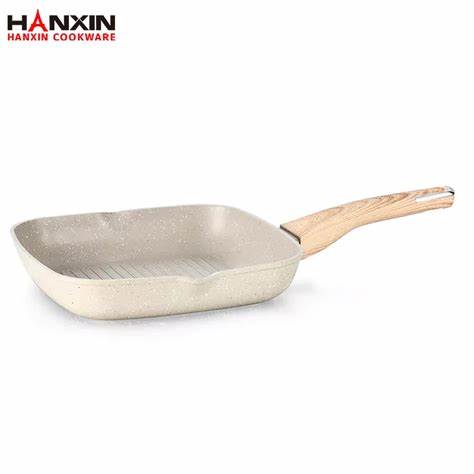
An Aluminum Non-Stick Grill Pan is designed for this kind of everyday use. It combines a lightweight aluminum body, a non-stick cooking surface, and raised grill ridges that help create attractive grill marks on food. It can be used for steak, chicken, fish, shrimp, vegetables, sandwiches, bacon, and many other meals.
For cookware distributors and brand owners, this product also has strong market value. It fits the growing demand for convenient indoor cooking, healthier meal preparation, and easy-to-clean kitchenware. This article explains how the pan works, what makes it useful, and what buyers should consider when choosing a high-quality grill pan.
Article Summary
An Aluminum Non-Stick Grill Pan helps users cook grilled-style food indoors without needing an outdoor barbecue. Its aluminum body supports fast heating, while the non-stick surface helps food release more easily. The ridged design creates grill marks and helps separate food from excess oil or moisture. Compared with cast iron grill pans, aluminum non-stick versions are generally lighter, easier to handle, and more convenient for everyday cooking.
Table of Contents
- What Is an Aluminum Non-Stick Grill Pan?
- Why Is a Grill Pan Useful for Indoor Cooking?
- How Does Aluminum Improve Cooking Performance?
- Why Does the Non-Stick Surface Matter?
- How Does the Ridged Grill Surface Work?
- What Foods Can You Cook with a Grill Pan?
- Aluminum Non-Stick Grill Pan vs Cast Iron Grill Pan
- What Features Should Buyers Look For?
- How to Use and Maintain the Grill Pan Properly
- Why Choose Zhejiang Hanxin Cookware Co., Ltd.?
- FAQ
- Conclusion
What Is an Aluminum Non-Stick Grill Pan?
An Aluminum Non-Stick Grill Pan is a stovetop pan designed to create grilled-style results indoors. Unlike a regular frying pan, it usually has raised ridges on the cooking surface. These ridges leave grill marks on food and help lift ingredients slightly away from released oil, juice, or moisture.
The aluminum body makes the pan easier to lift and move than heavier materials such as cast iron. This is helpful for daily cooking, especially when users need cookware that is practical, lightweight, and simple to store.
The non-stick coating adds another layer of convenience. Foods such as fish, chicken, vegetables, sandwiches, and cheese-based dishes are less likely to stick strongly to the surface. This makes turning food easier and reduces cleaning time after cooking.
Why Is a Grill Pan Useful for Indoor Cooking?
A grill pan gives users a way to enjoy grilled food without setting up an outdoor grill. This is especially useful for apartment kitchens, small homes, rainy days, or quick weekday meals.
Instead of preparing charcoal, gas, or outdoor equipment, users can place the grill pan directly on the stovetop. This makes it easier to cook grilled-style steak, chicken, seafood, vegetables, or sandwiches in a regular kitchen.
Another advantage is portion flexibility. Outdoor grills are often used for larger gatherings, while a grill pan is suitable for smaller meals. It can be used for one person, couples, or family portions depending on the pan size.
For modern consumers, this convenience is important. Many people want food that looks and tastes more special, but they also want cookware that fits daily routines.
How Does Aluminum Improve Cooking Performance?
Aluminum is widely used in cookware because it heats quickly and transfers heat efficiently. For a grill pan, this means users can start cooking faster and achieve more consistent results.
Quick heating is useful for foods that need surface browning, such as steak, chicken breast, shrimp, or sliced vegetables. When the pan reaches cooking temperature efficiently, food can develop better color and texture.
Even heat distribution also matters. If a pan heats unevenly, one side of the food may brown too fast while another side remains undercooked. A well-made aluminum body helps reduce this problem by spreading heat more evenly across the cooking area.
For buyers, aluminum also offers a practical balance between performance and weight. It allows the pan to remain functional without becoming too heavy for everyday users.
Why Does the Non-Stick Surface Matter?
When grilling indoors, some foods can stick easily, especially fish, chicken, marinated meat, cheese, or vegetables with natural sugars. A non-stick surface helps reduce this problem and makes cooking more comfortable.
This is especially helpful for delicate foods. Fish fillets, grilled cheese sandwiches, and vegetables are easier to turn when the surface releases food smoothly. Users do not need to scrape aggressively, which helps protect both the food and the coating.
A non-stick surface can also reduce the need for heavy oil use. A small amount of oil may still improve flavor and browning, but the coating allows users to cook with less oil than they might need on an untreated metal surface.
For everyday users, the biggest advantage may be cleanup. After cooking, food residue is usually easier to remove with warm water, mild detergent, and a soft sponge.
How Does the Ridged Grill Surface Work?
The ridged surface is the main feature that separates a grill pan from a regular flat pan. The raised lines create direct contact points between the food and the hot surface. These contact points form the grill marks that many consumers like.
The ridges also allow some oil, juice, or moisture to collect below the food instead of keeping the entire food surface flat against the pan. This can improve the appearance and texture of certain ingredients.
For meat and seafood, the ridges help create a more grilled look. For vegetables, they add visual appeal and make the dish look more prepared. For sandwiches or panini-style foods, the marks can create a restaurant-style presentation.
Because of this structure, cleaning between the ridges is important. Users should use soft tools that are safe for non-stick cookware instead of steel wool or hard scouring pads.
What Foods Can You Cook with a Grill Pan?
A grill pan is useful for more than steak. It can support many everyday meals and quick cooking tasks.
Common foods include chicken breast, steak, pork chops, bacon, fish fillets, shrimp, zucchini, eggplant, mushrooms, peppers, onions, asparagus, burgers, grilled cheese sandwiches, panini, and flatbreads.
For families, this makes meal planning more flexible. One pan can be used to cook protein, vegetables, and sandwiches. For people who want simple meals with better presentation, the grill pan is a practical choice.
From a retail perspective, this wide range of uses makes the product easier to market. It is not only for barbecue lovers. It also fits apartment users, beginner cooks, small families, and consumers who want quick indoor meals.
Aluminum Non-Stick Grill Pan vs Cast Iron Grill Pan
When choosing a grill pan, many buyers compare aluminum non-stick grill pans with cast iron versions. Cast iron is traditional and strong, but it is also heavy and requires more maintenance. Aluminum non-stick grill pans focus more on convenience, lighter handling, and easier cleanup.
| Cookware Type | Main Advantage | Possible Limitation |
|---|---|---|
| Aluminum Non-Stick Grill Pan | Lightweight, fast heating, easy food release, simple cleaning | Requires proper care to protect the non-stick coating |
| Cast Iron Grill Pan | Strong heat retention and traditional grilling performance | Heavy and requires seasoning and careful drying |
| Stainless Steel Grill Pan | Durable and professional appearance | Food may stick more easily without proper technique |
| Ceramic Grill Pan | Attractive appearance and smooth cooking surface | Requires careful use to protect the coating |
Cast iron may be preferred by users who want strong heat retention and traditional high-heat cooking. However, many household consumers care more about easy handling, faster cleanup, and less maintenance. For this market, an aluminum non-stick version is often more practical.
What Features Should Buyers Look For?
When selecting a grill pan, buyers should look beyond appearance. Small design details can affect cooking performance, durability, and customer satisfaction.
Quality Non-Stick Coating
The coating should be smooth, stable, and suitable for regular cooking. A reliable coating improves food release and makes cleaning easier. For retail buyers, this is important because coating performance directly affects customer reviews.
Strong Aluminum Body
The pan body should have enough thickness to support stable heating. If the body is too thin, the pan may feel less durable. A well-balanced aluminum body improves user confidence and cooking control.
Clear Ridged Surface
The ridges should be deep enough to create visible grill marks. If the ridges are too shallow, the grill effect may be weak. A good ridged structure improves both cooking function and food presentation.
Comfortable Handle
The handle should be easy to grip and comfortable during use. A heat-resistant handle improves safety, especially when cooking meat or vegetables for several minutes.
Suitable Bottom Design
Different markets may require different stove compatibility. Some consumers use gas stoves, while others need induction or flat cooktop options. Buyers should confirm the bottom structure based on their target market.
Size Options
Different sizes serve different users. Smaller grill pans are suitable for individuals or couples, while larger sizes are better for family meals. Offering multiple sizes can help distributors cover more consumer needs.
How to Use and Maintain the Grill Pan Properly
Proper use helps extend the life of a non-stick grill pan. Since the surface has a coating, users should avoid habits that may cause scratches or overheating damage.
Low to medium heat is enough for most indoor grilling tasks. Aluminum heats quickly, so extremely high heat is usually not needed. Empty heating for a long time should also be avoided.
A small amount of oil can be added before cooking. Even with a non-stick surface, light oil can improve browning, protect the coating, and improve food texture.
Wooden, silicone, or nylon utensils are recommended. Metal utensils may scratch the surface, and users should not cut food directly inside the pan.
After cooking, the pan should cool down before washing. A very hot pan should not be placed directly into cold water because sudden temperature changes may affect the cookware body or coating.
For cleaning, warm water, mild detergent, and a soft sponge are usually enough. If food remains between the ridges, users can clean carefully with a soft brush that is safe for non-stick cookware.
Why Choose Zhejiang Hanxin Cookware Co., Ltd.?
For B2B cookware buyers, a reliable manufacturer is important for product quality, customization, and long-term supply. Zhejiang Hanxin Cookware Co., Ltd. focuses on aluminum cookware and offers a wide range of non-stick cookware products for global customers.
The company’s product range includes grill pans, frying pans, sauce pans, casseroles, wok pans, sauté pans, deep fry pans, cookware sets, and ceramic coating cookware. This makes it easier for importers, distributors, retailers, and brand owners to build complete cookware collections.
Zhejiang Hanxin Cookware Co., Ltd. can support different product needs, including coating selection, body design, handle design, bottom design, lid options, size selection, packaging, and OEM/ODM projects.
For buyers who want to develop private-label cookware, flexible customization is valuable. An Aluminum Non-Stick Grill Pan can be developed for supermarkets, online stores, cookware brands, promotional projects, and household kitchenware collections.
FAQ
1. What is an Aluminum Non-Stick Grill Pan used for?
It is used for indoor grilling and everyday cooking. Common foods include steak, chicken, fish, shrimp, bacon, vegetables, burgers, and sandwiches.
2. Why choose aluminum for a grill pan?
Aluminum heats quickly, transfers heat efficiently, and is lighter than many traditional cookware materials. This makes the pan easier to use and clean.
3. What is the benefit of the non-stick surface?
The non-stick surface helps reduce food sticking, makes turning food easier, and simplifies cleaning after cooking.
4. Can this grill pan create grill marks?
Yes. The raised ridges can create grill-style marks on meat, vegetables, sandwiches, seafood, and other foods.
5. Is aluminum non-stick better than cast iron?
It depends on the user’s needs. Cast iron has strong heat retention, but it is heavy and needs more care. Aluminum non-stick cookware is lighter and easier for everyday indoor cooking.
6. How should users protect the coating?
Users should avoid metal utensils, avoid overheating an empty pan, use low to medium heat, clean with soft sponges, and store the pan carefully.
Conclusion
An Aluminum Non-Stick Grill Pan gives consumers a simple way to cook grilled-style meals indoors. It is useful for steak, chicken, seafood, vegetables, sandwiches, burgers, and many other everyday foods.
Its aluminum body supports quick heating, while the non-stick surface makes food release and cleaning easier. The ridged design helps create grill marks and improves food presentation. Compared with cast iron, it is lighter and easier to maintain, making it suitable for regular household use.
For cookware distributors, retailers, and brand owners, this product is a practical addition to a cookware line. It meets consumer demand for indoor grilling, convenient cooking, and easy maintenance.
If you are looking for high-quality aluminum non-stick cookware products, Zhejiang Hanxin Cookware Co., Ltd. can provide professional cookware solutions for your market. Contact us today to learn more about Aluminum Non-Stick Grill Pan options, custom designs, packaging solutions, and OEM/ODM cookware services.
Related News
Leave me a message
New Products