- Home
- About Us
- Products
- Aluminum Ceramic Cookware
- Aluminum Ceramic Cookware Set
- Aluminum Ceramic Kitchenware Set
- Aluminum Ceramic Fry Pan
- Aluminum Ceramic Deep Fry Pan
- Aluminum Ceramic Sauce Pan
- Aluminum Ceramic Casserole
- Aluminum Ceramic Grill Pan
- Aluminum Ceramic Pizza Pan
- Aluminum Ceramic Wok Pan
- Aluminum Ceramic Dutch Oven
- Aluminum Ceramic Saute Pan
- Aluminum Non-Stick Cookware
- Aluminum Non-Stick Cookware Set
- Aluminum Non-Stick Kitchenware Set
- Aluminum Non-Stick Fry Pan
- Aluminum Non-Stick Deep Fry Pan
- Aluminum Non-Stick Sauce Pan
- Aluminum Non-Stick Casserole
- Aluminum Non-Stick Grill Pan
- Aluminum Non-Stick Pizza Pan
- Aluminum Non-Stick Wok Pan
- Aluminum Non-Stick Dutch Oven
- Aluminum Non-Stick Saute Pan
- Composite Stainless Steel Non-Stick Cookware
- Aluminum Ceramic Cookware
- Cases
- News
- Download
- Send Inquiry
- Contact Us

Why Choose Tri-Ply Steel Composite Non-Stick Cookware for Modern Kitchens?
In modern cookware markets, buyers are no longer looking only for simple non-stick pans. Many consumers now want cookware that looks professional, heats efficiently, works for daily cooking, and is easier to maintain. This is why Tri-Ply Steel Composite Non-Stick Cookware has become an important product category for cookware brands, distributors, and retailers.
Unlike ordinary single-layer cookware, tri-ply composite cookware is designed with a multi-layer structure. A typical structure includes a 304 stainless steel interior, an aluminum middle layer, and a 430 stainless steel exterior. Each layer has a different function: 304 stainless steel provides a durable food-contact surface, aluminum improves heat transfer, and 430 stainless steel supports a stronger exterior structure and induction-compatible design.
For daily users, this cookware can be used for frying, boiling, simmering, sautéing, and family meal preparation. For B2B buyers, it offers a more premium product position than ordinary aluminum cookware while remaining practical for everyday kitchen use.
Article Summary
Tri-Ply Steel Composite Non-Stick Cookware is designed to combine the advantages of stainless steel, aluminum, and non-stick cooking performance. The 304 stainless steel interior provides durability and corrosion resistance, the aluminum core helps heat spread more efficiently, and the 430 stainless steel exterior supports a polished and professional appearance. With non-stick surface options, this cookware series can reduce food sticking and make cleaning easier for modern households.
Table of Contents
- What Is Tri-Ply Steel Composite Non-Stick Cookware?
- How Does the Tri-Ply Structure Work?
- What Are the Main Cooking Benefits?
- What Surface Options Are Available?
- What Products Can Be Included in This Series?
- Tri-Ply Steel Composite Cookware vs Ordinary Cookware
- What Should B2B Buyers Consider?
- How to Use and Maintain It Properly
- Why Choose HANXIN?
- FAQ
- Conclusion
What Is Tri-Ply Steel Composite Non-Stick Cookware?
Tri-Ply Steel Composite Non-Stick Cookware is cookware made with three functional material layers. Instead of relying on only one material, it combines different metals to improve cooking performance, durability, and product appearance. The inner cooking surface is usually made with 304 stainless steel, which is known for durability, corrosion resistance, and suitability for food-contact use. The middle aluminum layer helps improve heat transfer because stainless steel alone does not conduct heat as quickly as aluminum. The outer 430 stainless steel layer gives the cookware a strong exterior and can support induction-compatible cookware design. When this structure is combined with a non-stick cooking surface, the cookware becomes easier to use for daily meals. Food releases more smoothly, cleaning is more convenient, and the product still keeps a professional stainless steel appearance.
How Does the Tri-Ply Structure Work?
The key value of tri-ply cookware is the cooperation between different material layers. 304 Stainless Steel Interior The 304 stainless steel interior provides a durable cooking surface and gives the cookware a clean, high-quality look. It is suitable for customers who want cookware with a more premium structure than ordinary aluminum non-stick cookware. Aluminum Middle Layer The aluminum middle layer improves heating efficiency. It helps the cookware heat faster and spread heat more evenly across the cooking surface. This is useful for frying, simmering, boiling, and sautéing because stable heat can reduce the chance of uneven cooking. 430 Stainless Steel Exterior The 430 stainless steel exterior helps strengthen the cookware body and supports a modern stainless steel appearance. For buyers who need induction-compatible cookware, 430 stainless steel is also an important material because it has magnetic properties. Together, these three layers make Tri-Ply Steel Composite Non-Stick Cookware more balanced than many single-material cookware products.
What Are the Main Cooking Benefits?
Tri-ply composite cookware is designed for users who want both cooking performance and daily convenience. First, the aluminum layer improves heat response. This helps the pan or pot reach cooking temperature more efficiently and reduces hot spots during cooking. Second, the stainless steel structure improves durability and appearance. Many consumers prefer stainless steel cookware because it looks professional and fits modern kitchen styles. Third, the non-stick surface helps reduce food sticking. This is especially useful for eggs, vegetables, fish, noodles, sauces, and other daily foods that may stick to untreated stainless steel surfaces. Finally, the cookware can be developed into different product types, such as cookware sets, fry pans, sauce pans, casseroles, and wok pans. This makes it suitable for both household use and commercial product lines.
What Surface Options Are Available?
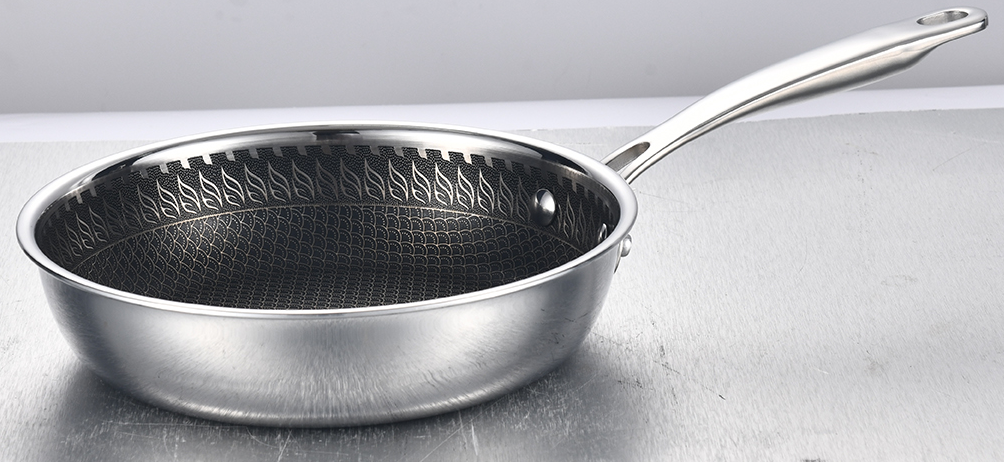
Different markets may require different cookware surface designs. HANXIN can develop tri-ply steel composite cookware with multiple surface options based on customer needs. A polished stainless steel finish gives the cookware a clean and professional appearance. This option is suitable for customers who prefer classic stainless steel cookware. A non-stick coating makes the cookware easier to use and clean. It is suitable for everyday family cooking and consumers who want convenient food release. A honeycomb or etched cooking surface can also be developed for certain product lines. This type of surface can help create a more distinctive appearance and improve product differentiation in retail markets. For B2B buyers, choosing the right surface depends on the target market, price level, cooking habits, and product positioning.
What Products Can Be Included in This Series?
Tri-Ply Steel Composite Non-Stick Cookware can be developed into a complete cookware collection. Common product options include cookware sets, fry pans, sauce pans, casseroles, and wok pans. A fry pan is suitable for eggs, pancakes, meat, fish, and vegetables. A sauce pan can be used for heating milk, making sauces, boiling eggs, and reheating soup. A casserole is useful for soup, stew, pasta, noodles, and family-style meals. A wok pan is practical for stir-frying, noodles, rice, vegetables, and larger portions. For importers, distributors, retailers, and private-label cookware brands, offering multiple product types in the same material series can help build a more complete cookware line.
Tri-Ply Steel Composite Cookware vs Ordinary Cookware
Many buyers compare tri-ply steel composite cookware with ordinary aluminum cookware, traditional stainless steel cookware, and standard non-stick cookware. Each type has its own market, but tri-ply composite cookware offers a stronger balance between appearance, heating performance, and daily convenience.| Cookware Type | Main Advantage | Possible Limitation |
|---|---|---|
| Tri-Ply Steel Composite Non-Stick Cookware | 304 stainless steel interior, aluminum heat transfer, 430 stainless steel exterior, non-stick convenience | Requires proper care to protect the non-stick surface |
| Ordinary Aluminum Non-Stick Cookware | Lightweight, fast heating, easy to use | May look less premium than stainless steel cookware |
| Traditional Stainless Steel Cookware | Durable and professional appearance | Food may stick more easily without proper heat control |
| Cast Iron Cookware | Strong heat retention | Heavy and requires more maintenance |
For buyers who want a cookware series with a higher-end look but still need easy daily use, Tri-Ply Steel Composite Non-Stick Cookware is a practical choice.
What Should B2B Buyers Consider?
When selecting tri-ply composite cookware, B2B buyers should look beyond appearance. Material structure, coating performance, handle design, lid matching, packaging, and product combination all affect market success. Buyers should confirm whether the product is designed for gas, electric, ceramic, or induction cooktops. They should also confirm the surface type, such as polished finish, non-stick coating, uncoated stainless steel, or honeycomb surface. For retail markets, product appearance and packaging are important. For wholesale and private-label projects, stable quality, size options, logo customization, and production consistency are also key factors.
How to Use and Maintain It Properly
Proper use can help extend the service life of Tri-Ply Steel Composite Non-Stick Cookware. Low to medium heat is recommended for most daily cooking, especially when using non-stick coating. Empty heating for a long time should be avoided because overheating may affect the coating and cookware structure. Wooden, silicone, or nylon utensils are recommended for non-stick surfaces. Metal utensils may scratch the coating. After cooking, allow the cookware to cool before washing. Clean with warm water, mild detergent, and a soft sponge. For stainless steel exterior surfaces, users can wipe the cookware dry after cleaning to help maintain a clean appearance.
Why Choose HANXIN?
HANXIN is a cookware manufacturer with over 25 years of production experience. We focus on aluminum cookware, stainless steel composite cookware, non-stick cookware, ceramic coating cookware, and customized cookware solutions for global buyers. For Tri-Ply Steel Composite Non-Stick Cookware, HANXIN can support different product designs, including polished finish, non-stick coating, uncoated surface, honeycomb surface, handle design, lid matching, logo printing, and packaging customization. We work with importers, distributors, retailers, supermarkets, online sellers, and private-label brands. Whether buyers need a single product or a complete cookware set, HANXIN can provide practical OEM/ODM support based on market needs.
FAQ
1. What is Tri-Ply Steel Composite Non-Stick Cookware? It is cookware made with three functional layers, usually including a 304 stainless steel interior, aluminum middle layer, and 430 stainless steel exterior, combined with a non-stick cooking surface. 2. Why is aluminum used in the middle layer? Aluminum helps improve heat transfer. It allows the cookware to heat faster and distribute heat more evenly than stainless steel alone. 3. What is the benefit of 304 stainless steel? 304 stainless steel provides durability, corrosion resistance, and a clean food-contact cooking surface. 4. Can this cookware be used on induction cooktops? Tri-ply cookware with a 430 stainless steel exterior can support induction-compatible design. Buyers should confirm the final bottom structure and cooktop compatibility before ordering. 5. Can HANXIN customize this cookware series? Yes. HANXIN supports OEM/ODM customization, including size, surface finish, coating, handle, lid, logo, and packaging.
Conclusion
Tri-Ply Steel Composite Non-Stick Cookware is a practical product category for modern kitchens. It combines the durability of stainless steel, the heat transfer advantage of aluminum, and the convenience of non-stick cooking. For household users, it supports boiling, frying, simmering, sautéing, and daily meal preparation. For B2B buyers, it offers a strong balance of premium appearance, cooking performance, customization flexibility, and market value. If you are looking for tri-ply composite cookware products, HANXIN can provide cookware sets, fry pans, sauce pans, casseroles, wok pans, and customized OEM/ODM cookware solutions for your market.Related News
- How Does an Aluminum Non-Stick CD Bottom Wok Pan Improve Stir-Frying Performance?
- Why Is an Aluminum Non-Stick Casserole Ideal for Everyday Family Cooking?
- Why is an Aluminum Non-Stick Sauce Pan the Best Choice for Everyday Cooking?
- Why Is Aluminum Non-Stick Deep Fry Pan the Best Choice for Modern Cooking?
- Why Choose an Aluminum Ceramic Kitchenware Set for Modern Cooking?
- How Does an Aluminum Non-Stick Saute Pan Improve Cooking Performance?
Leave me a message
New Products